The digestive system is designed to manage far more than we often give it credit for. Every day, it encounters microbes, food residues, and environmental inputs and, when supported, it clears what isn’t needed with quiet efficiency.

When the gut feels settled, balanced, and well-resourced, this process tends to happen naturally.
At times, however, the system can become under strain. Digestion may feel heavier, bowel patterns may change, or sensitivity may increase. In these moments, the gut may simply need more support to restore its natural rhythm.

The Gut Is an Environment, Not a Battlefield
Rather than something to be controlled or overridden, the gut responds best to steadiness and care.
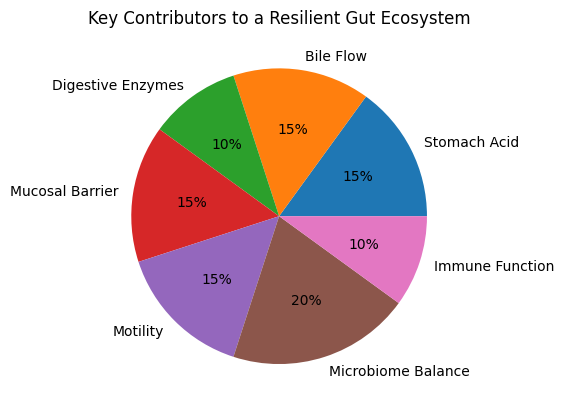
Digestive secretions, gut lining integrity, microbial balance, and gentle motility all work together to maintain harmony within the digestive system. When these foundations are supported, the body is generally well-equipped to regulate its internal environment.
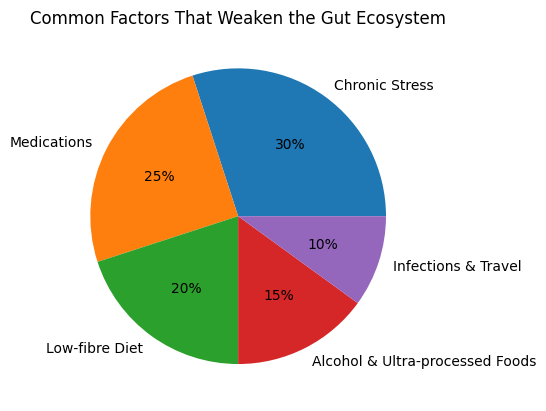
When support is reduced through stress, travel, medication use, dietary changes, or long periods of digestive discomfort, balance can feel harder to maintain.
When Symptoms Are Quiet but Persistent
Not all digestive imbalance presents clearly.
Some people notice fluctuating bloating, changes in energy, skin reactivity, or shifting food tolerance. Others simply feel that their system isn’t as resilient as it once was, even when investigations appear reassuring.
In many cases, this reflects a need for steadier foundational support rather than more intensive intervention.
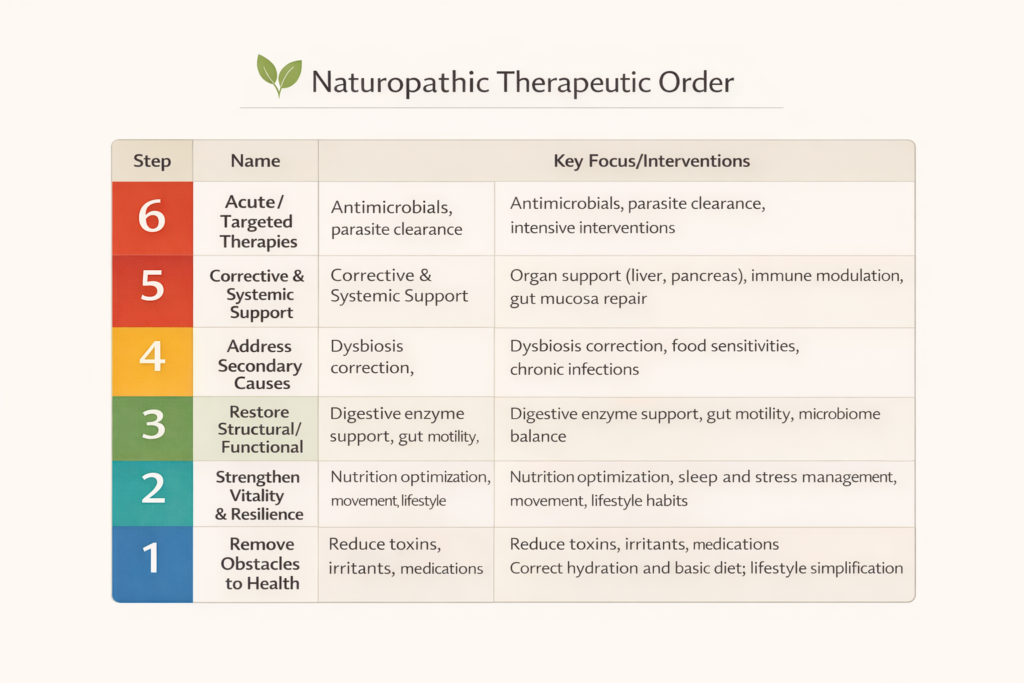
Supporting the Foundations First
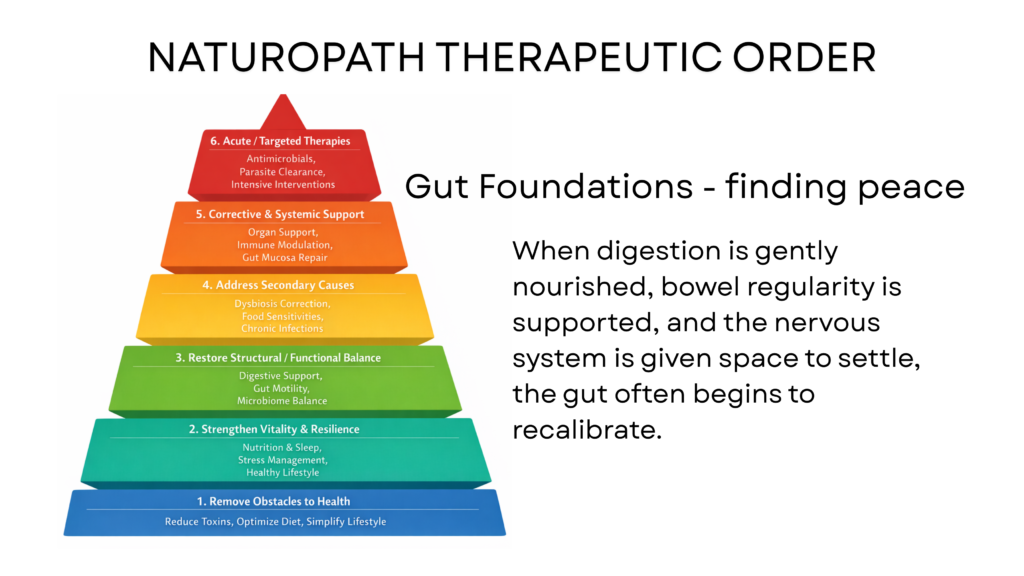
When digestion is gently nourished, bowel regularity is supported, and the nervous system is given space to settle, the gut often begins to recalibrate.
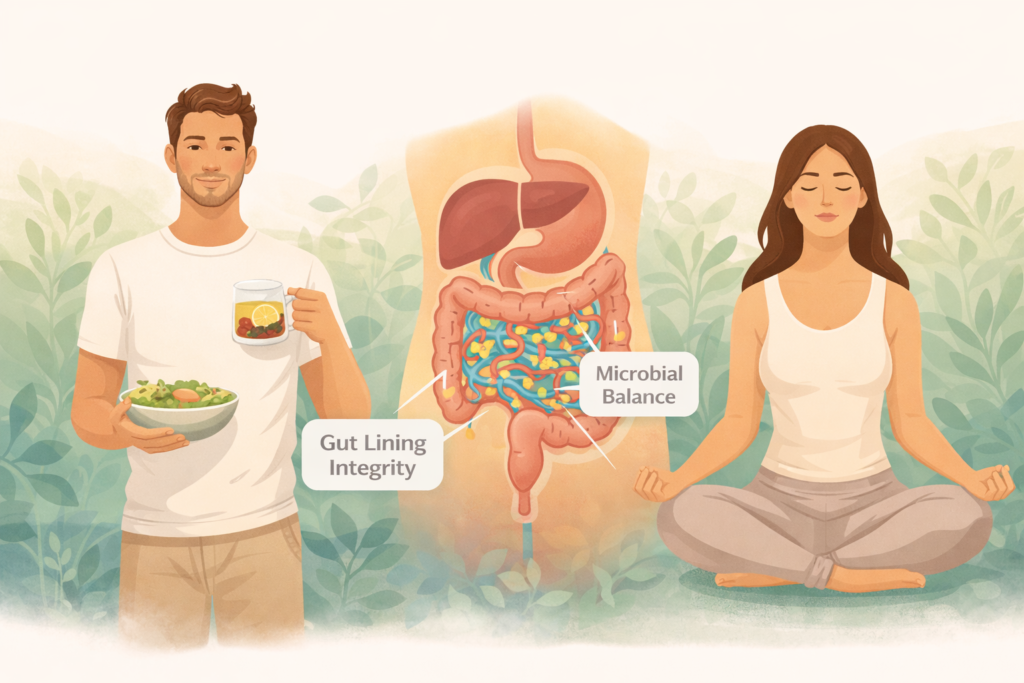
From this place, the body can respond more comfortably, clear more efficiently, and restore balance at its own pace. For some, this foundational approach alone brings meaningful change.
A Closing Reflection
If this feels familiar, consider it an invitation to slow down and listen to what your body is asking for. Often, the most effective support is quiet, consistent, and restorative. When the foundations are cared for, the gut has a remarkable ability to find balance naturally.